Entry · Ref LVLTL209
When Every Minute Counts: Choosing a Reliable Business Lockout Service
- Posted
- 2026-10-19
- Last amended
- 2026-10-19
- Account
- @businesslockoutservicepost
The Moment You Realize You Are Locked Out of Your Business
It usually happens at the worst possible time. Maybe you arrived early to open the shop and the key snaps off in the deadbolt. Or a busy Saturday afternoon and the electronic strike on the back door stops responding. Suddenly you are standing outside your own commercial space, inventory or servers or sensitive files on the other side of a door that will not budge. In Philadelphia, where small businesses pack tight blocks and every lost hour cuts into margins, that moment calls for a business lockout service that treats speed and care as equally important.
I have been called to storefronts in Berwyn and corner offices in Center City, and I can tell you that a commercial lockout feels different from a residential one. The stakes are higher. There is inventory that needs climate control, client appointments that cannot be rescheduled, and often an alarm system that will trigger if the door stays open too long. A reliable business lockout service understands those pressures and arrives with the right tools and the right attitude.
What Makes a Commercial Lockout Distinct
A residential lockout usually involves a standard cylindrical lock or a simple deadbolt. A commercial property, on the other hand, might have a heavy-duty mortise lock, a panic bar with a cylinder that is threaded, or an access control system tied to a transponder key. The locks themselves are tougher. Brands like Schlage and Baldwin make commercial-grade hardware that resists picking and drilling. Medeco cylinders, common in high-security settings, use a sidebar mechanism that a standard pick gun cannot defeat. That means a generic approach will not work.
A qualified auto locksmith or commercial locksmith knows to assess the lock first. Sometimes the fastest entry is not through the lock at all. A dog door, a window with a weak latch, or a loading dock roll-up door might give a quicker path. But when the only option is the lock itself, the technician needs to decide between picking, using a bump key, drilling, or even removing the cylinder entirely. Every choice has trade-offs. Picking is non-destructive but can take time on a high-security cylinder. Drilling is faster but means replacing the lock afterward. A good locksmith will explain the options and let you choose the balance between speed and cost.
Tools of the Trade
You hear about lockout tools from movies, but real-world use is different. A pick gun can speed up pin-tumbler locks, but it is not a magic wand. A bump key works on some wafer locks, but it requires a precise cut. The most reliable tool in a commercial setting is often a set of manual picks and a tension wrench, combined with experience. I have seen technicians spend ten minutes on a lock that looks simple and then open a tricky Medeco in under two because they read the binding order correctly.
Smart locks and keyless entry systems add another layer. A smart lock might have a backup keyway hidden in the escutcheon, or it might require a factory reset code. A good business lockout service will have relationships with manufacturers like Schlage or Baldwin to get technical support when needed. They will also carry a range of transponder key programmers for automotive and commercial fobs. Being locked out of a fleet vehicle or a gated lot is its own kind of emergency, and the same company should handle that too.
Why Local Knowledge Matters
Philadelphia has a lot of old buildings. A lockout in a historic storefront on Chestnut Street is different from one in a newer build in Berwyn. Older doors may have settled, frames may be out of square, and the lock might be a vintage model that is no longer made. A national chain might send a technician who has never worked on a Baldwin rim lock from the 1920s. A local 24-hour locksmith who works the city knows those quirks. They also know the neighborhoods, the traffic patterns, and the best route to get to you fast.
I have seen the difference firsthand. A franchise outfit once sent a guy with a bag full of Kwikset tools to a building with all Medeco hardware. He spent an hour before calling for backup. A local locksmith who works the area would have recognized the rose trim from the street and brought the right cylinder removal tool in the first place. That local knowledge saves time, and time is money when your business is locked out.
What to Look for in a Lockout Service
Not all emergency service is equal. Here are a few things to consider before you need to call:
- Response time guarantees. A service that promises arrival in 30 minutes or less is worth a premium. Ask if they track that metric.
- Transparent pricing. A reputable company will quote the service call fee and any additional charges before they start work. No hidden fees for after-hours or mileage.
- Commercial experience. Ask if they handle commercial locksmith work regularly. A locksmith who mostly does houses may not have the tools for a heavy-duty deadbolt or a panic bar.
- Inventory of common parts. If drilling is required, can they replace the cylinder on the spot? Carrying Schlage, Medeco, and Baldwin replacements means you are not waiting on a special order.
- Insurance and bonding. A professional service carries liability insurance. If they damage the door or the frame, you want that covered.
Organizations like AAA often have vetted lockout providers in their network, but those are usually oriented toward roadside and residential. For a commercial property, a dedicated business lockout service that specializes in commercial and industrial work is often a better fit. Pop-A-Lock has a national presence, but local franchises vary in quality. The best bet is a locally owned company with a track record in your area.
After the Lockout: Prevention Steps
Once you are back inside, the immediate relief fades into the question of how to avoid this happening again. A few practical steps can reduce the chance of a repeat lockout:
- Key control. Keep a spare key in a secure lockbox on the property, with the combination known only to trusted staff. Some smart locks allow temporary codes for emergency access.
- Regular maintenance. A deadbolt that sticks or a lock that feels gritty is a sign that the pins are wearing. A commercial locksmith can clean and lubricate the cylinder before it seizes.
- Master key systems. If you have multiple doors or locations, a master key system lets you limit access and simplifies rekeying after a staff change. Lock rekeying is much cheaper than replacing cylinders.
- Upgrade to high-security cylinders. Medeco and Schlage primus cylinders resist picking and bumping. They cost more upfront but reduce the risk of unauthorized entry and mechanical failure.
- Emergency contact on file. Have the number of a reliable 24-hour locksmith saved in your phone and posted in the break room. When panic hits, you do not want to search for a number.
I have seen businesses that treated their locks as an afterthought until a lockout cost them a day of revenue. Then they invested in a good master key system and a spare key protocol. That is the smart move. A business lockout service is there for the emergency, but the goal is to never need it.
The Human Side of the Call
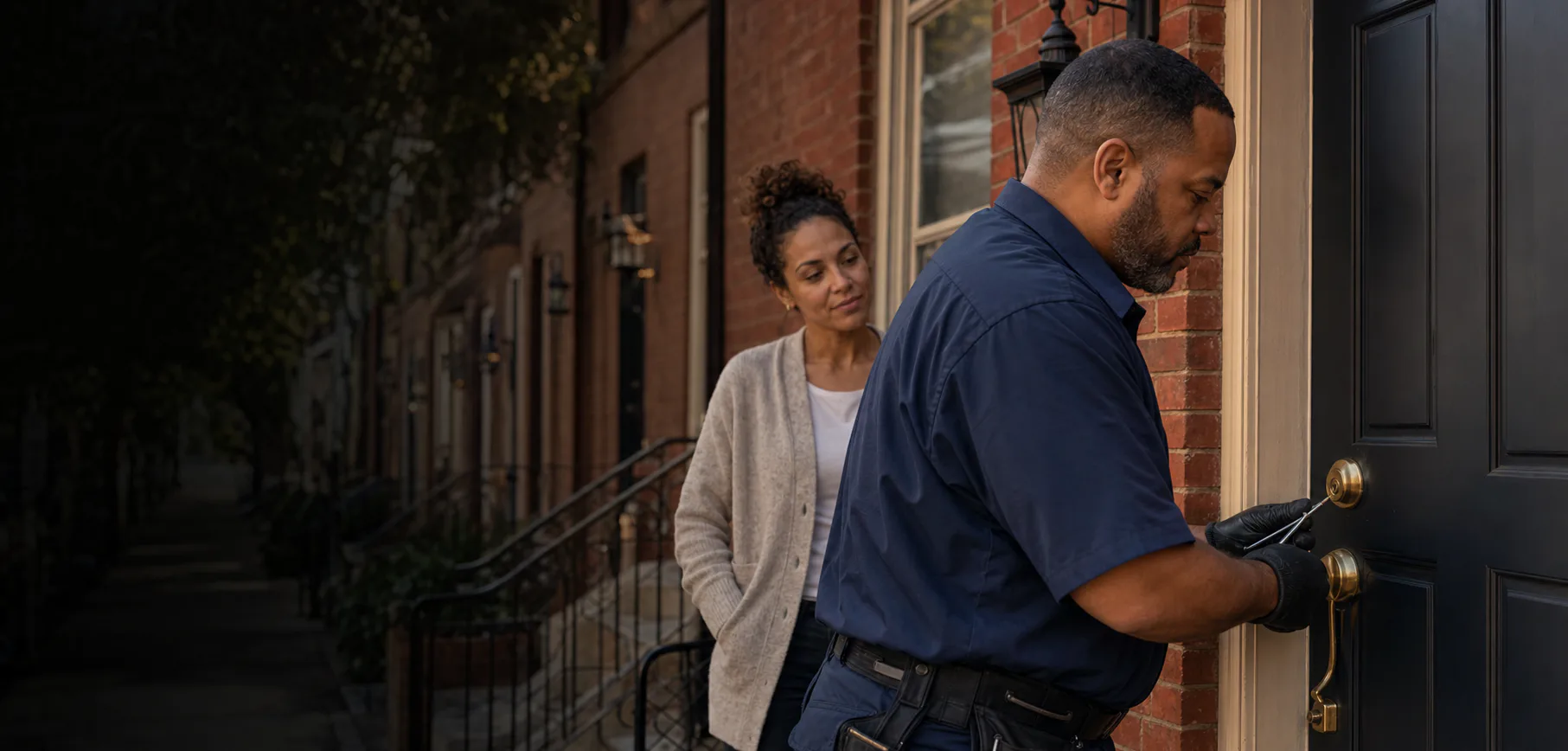
When a technician shows up to a commercial lockout, they are not just fixing a lock. They are helping a person who is stressed, possibly embarrassed, and definitely losing money. The best service calls I have been part of are the ones where the locksmith explains what they are doing, works quickly but without rushing, and leaves the site better than they found it. That might mean oiling a hinge that was squeaking, or adjusting a strike plate that was catching. It is the kind of care that turns a one-time call into a long-term relationship.
In Philadelphia, where businesses rely on word of mouth and repeat customers, trust matters. A locksmith who shows up on time, quotes a fair price, and does the job right earns that trust. That is the standard a good business lockout service should meet. When you need one, you need one who understands that every minute the door is locked, the business is losing something that cannot be recovered. The right service gets you back to work and helps you stay there.